
TL;DR: Here’s the reality: there is no single best social advertising platform. The right choice comes down to what you are trying to achieve, who you need to reach, and whether your team can create ads that fit the channel. Some brands do better focusing on one or two platforms, while others benefit from diversifying across more.
Advertising teams often see competitors on a certain platform and assume they are late. Usually, that is the wrong takeaway. Better results come from picking the platforms that match your business, not chasing every channel that looks popular. Start by figuring out which social ad platforms actually fit your business. If a channel isn’t helping you reach the right audience or bring in new customers, it’s not worth investing in.
How to Figure Out Which Social Advertising Platforms Fit
Before you invest in any channel, ask these three questions:
- What are you trying to get out of it? Sales, leads, awareness, app installs, and local demand do not all call for the same social media platforms.
- Where are your customers most likely to notice you and take action? That changes depending on whether they are casually browsing, comparing options, or ready to buy. Each social advertising platform also has unique user behavior and consideration windows to account for.
- Does your team have the ability to create ads that are optimized for that channel? This is where a lot of brands get stuck. I’ve seen creative be what holds brands back more often than they expect. A team may have the budget to test a new platform, but if they can’t make ads that feel right for that space, results usually fall short. In most cases, ads work better when they look native to the channel they are being served on.
What Each Social Media Platform Is Actually Good At
These social advertising platforms are not interchangeable. Some are better for discovery, some are better for research, and some are better for scale. I’ve seen how easy it is for teams to feel like they need to be on a platform just because their competitors are. But when you step back and look at the audience, the offer, and what the team can actually support, it becomes pretty clear which platforms are worth your time.

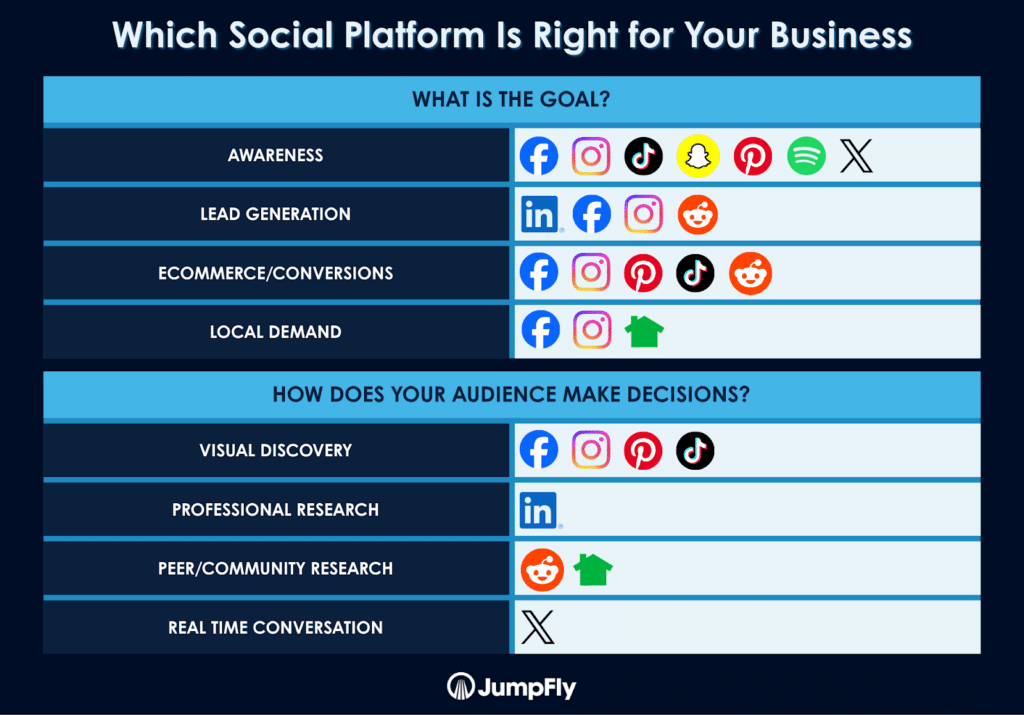
Facebook & Instagram (Meta): Usually the strongest starting point for brands that need scale, remarketing, and conversion potential all in one ecosystem. Meta ads tend to work well for brands trying to reach a broad or varied audience, especially when they have creative across multiple formats, including video and static images. For most advertisers, Facebook and Instagram work as a shared buying environment rather than two separate paid social strategies. This is where most of our clients start, since Meta is the most established social platform when it comes to advertising opportunities. Once it’s working, they tend to scale and then branch out into other platforms.
TikTok: Best for brands trying to reach audiences who are drawn to trends and fast-moving short-form video. TikTok advertising is especially effective for brands that can consistently create simple, attention-grabbing content that feels native to the platform and hooks people right away.
Snapchat: Best for brands trying to reach a younger audience with fast, mobile-first creative. Snapchat ads work especially well for awareness, product launches, and quick action.
LinkedIn: Often the strongest fit for B2B lead generation when you need to reach specific decision-makers and care about lead quality. LinkedIn advertising works best with professional audiences and content that feels credible, useful, and focused on business value, like thought leadership, case studies, and lead-gen offers.
Pinterest: A strong match for planning heavy categories such as home, beauty, fashion, gifting, and seasonal retail. Pinterest ads tend to work best when the customer journey starts with ideas and the creative is centered on the product.
Reddit: A smart option when buyers spend time reading, comparing, and digging into the details before making a decision. Content works best when it is informative and relevant to the community it is speaking to.
Spotify: Usually better as a supporting channel than a primary one. Spotify advertising makes the most sense for brands using audio to build familiarity, especially through music streaming and podcasts.
Nextdoor: A strong option for local and regional businesses. When location and trust matter, this can be more useful than a bigger national platform. Nextdoor advertising works especially well for brands promoting local services and special offers.
X (formerly Twitter): Most useful for brands that benefit from being part of what is happening right now, such as launches and live events. This social media platform works well with timely and concise content.
Pick the Social Platforms That Earn Their Place
Your platform mix should reflect your business, not someone else’s. Some brands are better off staying focused on a few channels, while others have a reason to diversify. For most brands, the smartest move is to find a few that work and expand from there.
Frequently Asked Questions
Which social media platform is best for B2B?
LinkedIn is often the strongest starting point for B2B, especially when job title, company, or industry targeting matters.
Which social platform is best for e-commerce?
It depends on the product and how people shop for it, but Facebook and Instagram are usually where brands start. They make it easy to build awareness, retarget interested shoppers, and drive purchases all within the same ecosystem.
Should I advertise on multiple social media platforms?
Yes, but only if you have the budget and creative capacity to do it well. Your target audience also needs to be active on those platforms.
How do I know if a social advertising platform is actually working?
Judge performance against your real business goal, whether that is sales, qualified leads, cost per acquisition, or another meaningful conversion metric, not just clicks or engagement.