

Sometimes a page drops in rankings even when everything seems fine. The title tag is optimized, the content is strong, the page loads quickly, matches the topic, and uses appropriate keywords. On the surface, the page should continue to perform well. However, rankings are influenced by more than just the words on your page, and this is where search intent drift comes into play.
Search intent drift happens when the type of content search engines like Google prefer for a query changes over time. There are 5 different intents—informational, commercial, transactional, navigational, and generative—and different types of content are required to fulfill each intent.
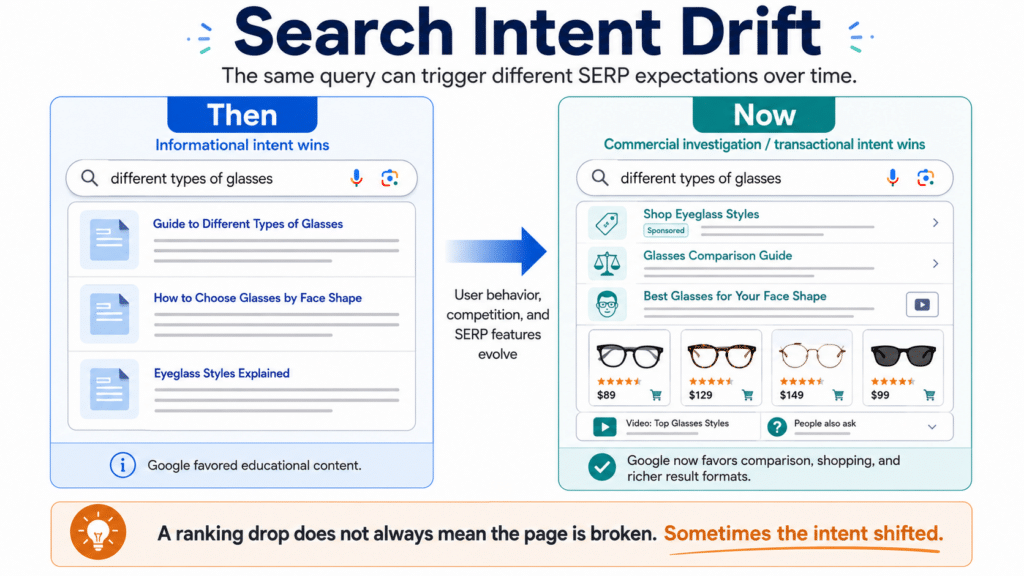
So your page may not have changed, but the search intent behind that query may have pivoted enough that your content no longer appears to be the best fit. If you are not watching for that shift, rankings can decrease even when the page itself still looks good.
What Is Search Intent Drift?
Search intent is about what a user wants to achieve when they search. Are they trying to learn, compare products, find a local service, or make a purchase? Most search engine optimization professionals (SEOs) get this. The challenge is that search intent can change, or drift, sometimes quickly and sometimes slowly, depending on the topic.

A keyword that once returned blog posts may now favor ecommerce category pages. A query that used to reward broad informational content may now see the search engine results page (SERP) offer comparison guides, videos, tools, or product roundups.
Google adjusts results based on user behavior, evolving expectations, new competitors, and changes in the broader search landscape. Basically, while being creative can help future-proof content, optimizing for search intent is not a one-time task. It requires ongoing review.
Why Rankings Drop Even When the Page Looks Fine
This is why intent drift can be so frustrating. If your rankings drop and it is not due to an algorithm update, technical problems, thin content, or clear on-page issues, you need to dig deeper. It could be that your page is answering the right question with the wrong intent.
For example, imagine you have a blog post about types of eyeglasses. Last year, Google might have favored long-form articles covering shape, size, and buying tips. Now, the results might show more ecommerce category pages, comparison pages, or product lists with prices and reviews. Your article could still be strong from an SEO perspective, but if search results now require a different content intent, it might not rank well anymore.
Signs Search Intent Has Drifted
A ranking drop on its own does not always mean intent drift, but there are a few signs that can point in that direction:
- Competitors with different page types begin outranking you;
- A page that once ranked well now seems mismatched compared to the current results;
- The SERP looks noticeably different from what it did before;
- Click-through rate declines despite steady impressions;
- Your page is losing ranking positions even though there have been no major site changes or algorithm updates.
That is why search intent analysis is important. You should not only check your page against your own standards, but also compare it to what is currently ranking in the search results.
How to Check for Search Intent Drift
The best way to diagnose intent drift is to look directly at the SERP. Search the target or secondary keyword in incognito mode or another de-personalized browser setting and study what is ranking now. Ask the following:
- Are the top pages informational, transactional, local, or navigational?
- What content types and intents dominate the results?
- Have the phrases suggested in related searches or autosuggest changed?
This is a common mistake for many SEO teams. They focus on improving the page without checking if it still matches what the query now means. Keyword relevance is only useful if the page’s intent matches what search engines have determined that searchers expect to see.
Why Search Intent Should Be Reviewed Regularly
Search intent is one of the more important parts of SEO because it sits between the page’s relevance and the search result. Rankings can change because searcher behavior changes, the search engines become more adept at understanding keyword intent, or the search environment changes, not just because your site does. The pages that rank most consistently are often the ones that are reviewed, updated, and realigned as search intent evolves.
Dealing with search intent drift means ensuring your pages still align with what search engines determine searchers want. When your rankings drop despite the page, site, and competition remaining the same, analyze the SERP to see if the intent has drifted beyond your content’s reach.